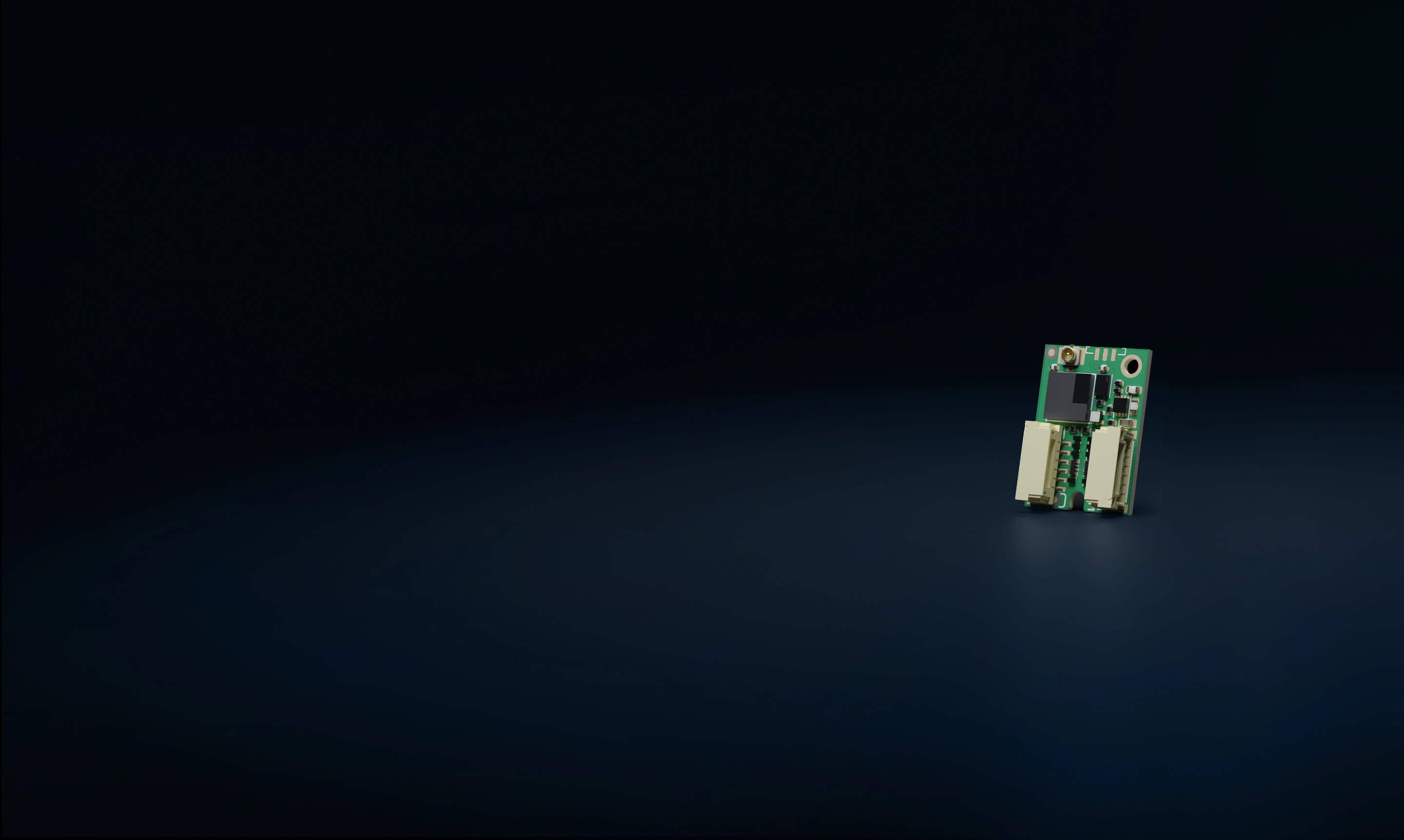
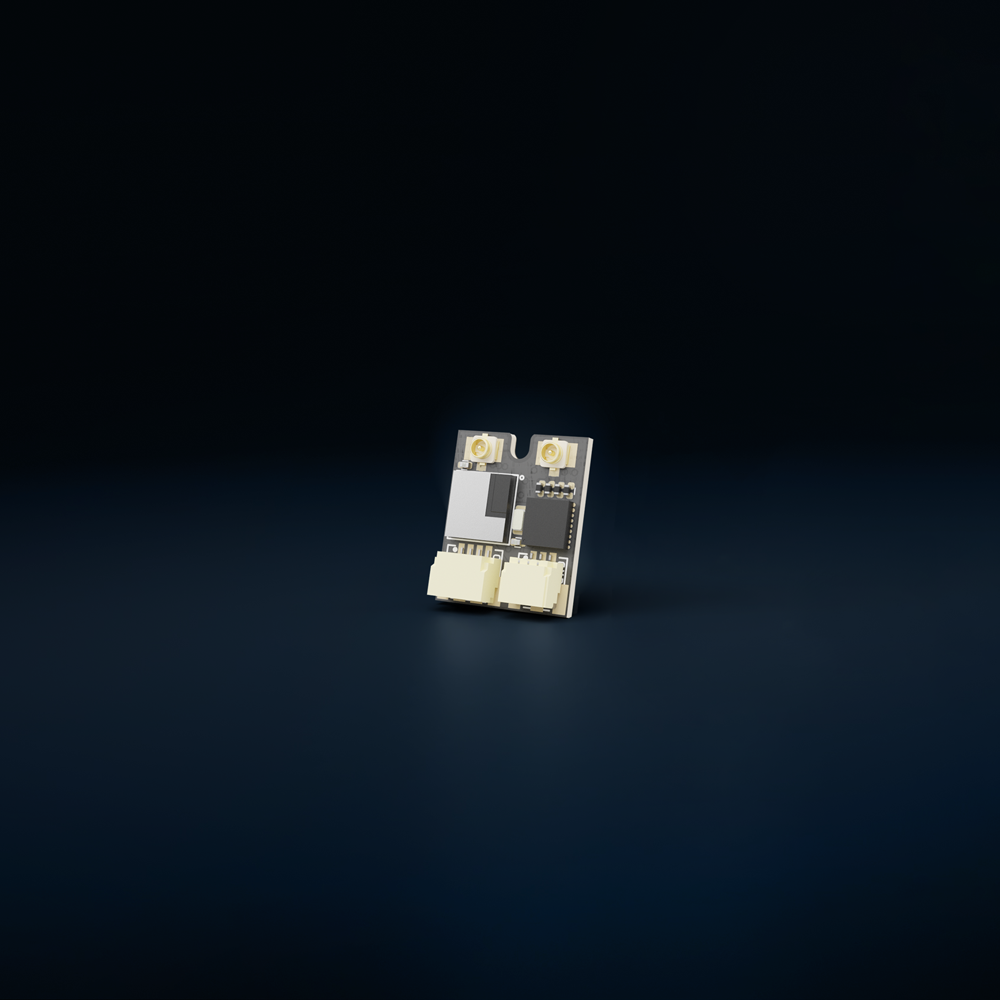
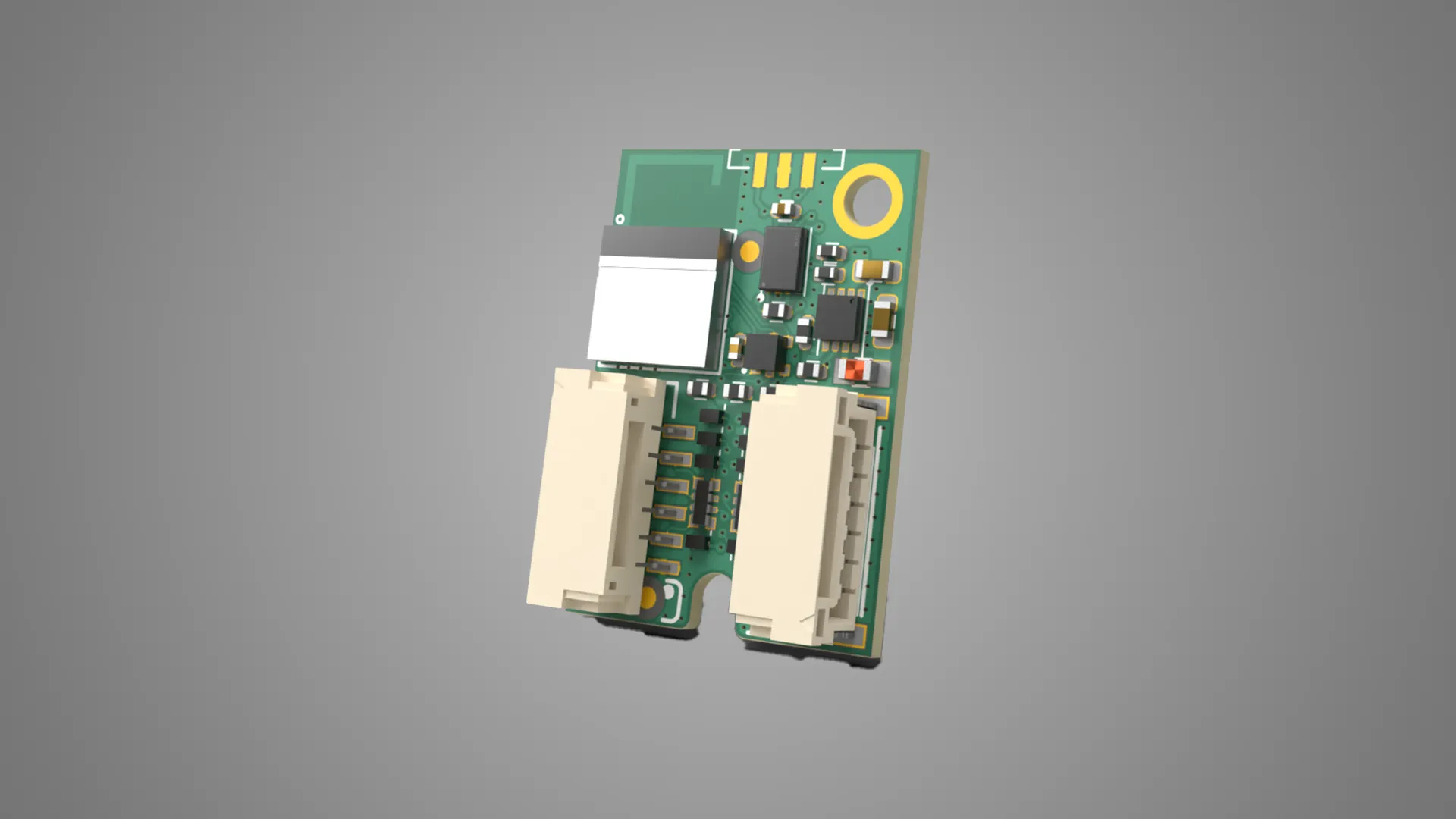
The Smallest RID Module
for Drone Manufacturers

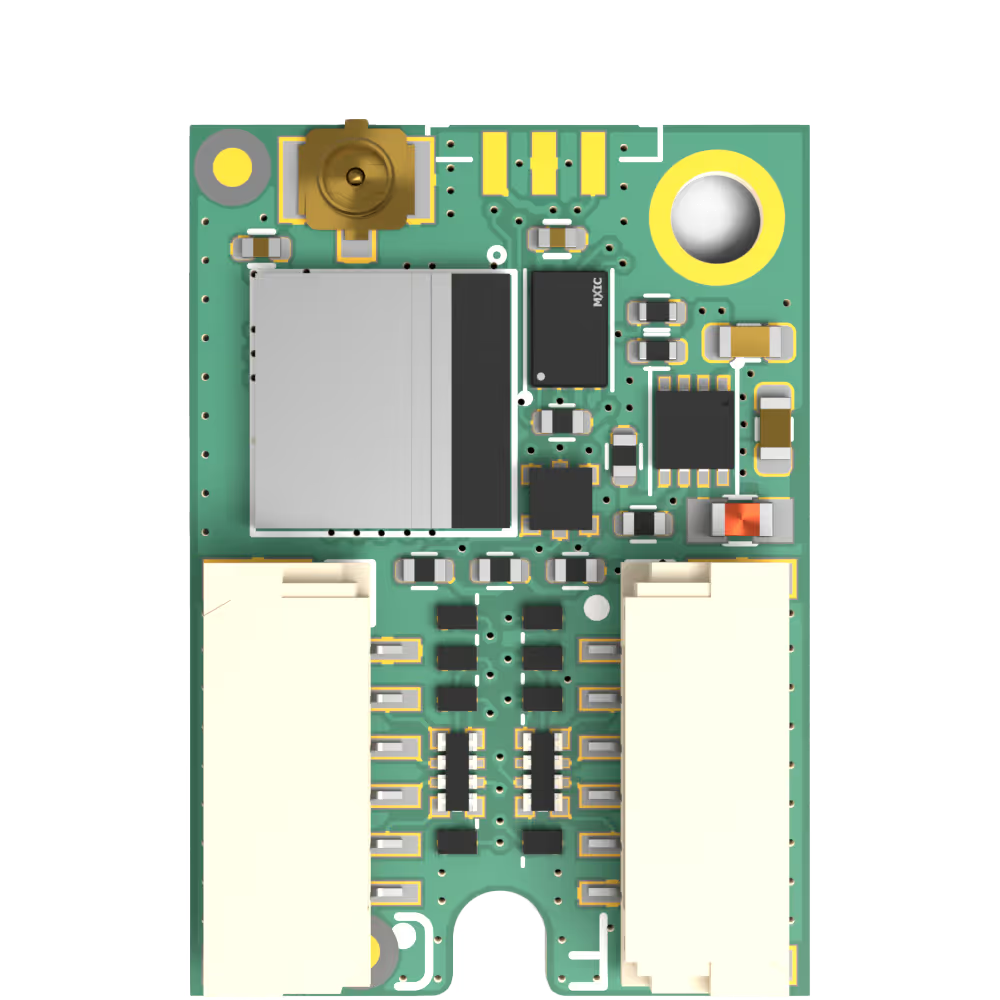
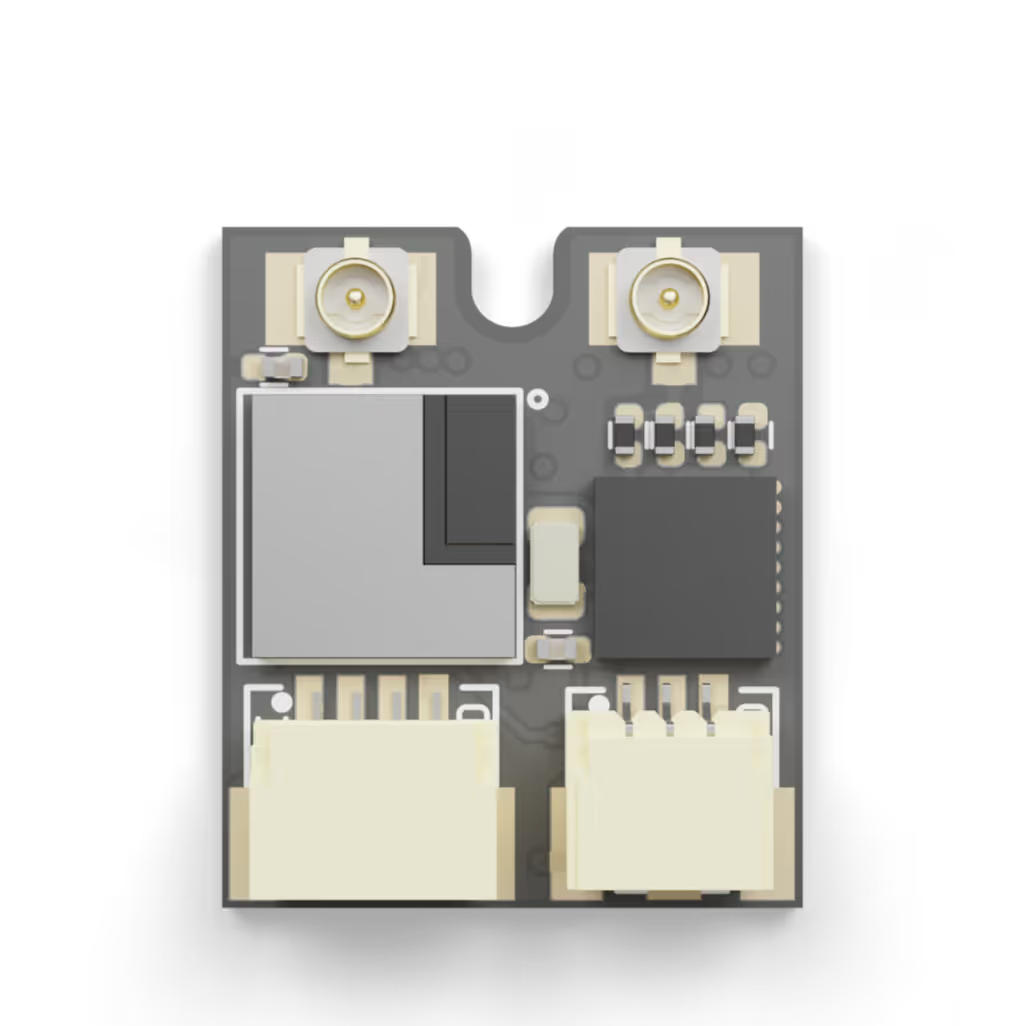
Dronetag DRI is a factory-ready solution for drone manufacturers, enabling easy integration of Direct/Broadcast Remote ID into new drone models. The easiest way to get RID technology without years of R&D and product testing.
€49 / $59
Buy now
Long-range broadcast
Transmits over Bluetooth 4 & 5 up to 3 km.
As light as 1.5 g
The most compact RID solution on the market.
Comes with an app
For setup, diagnostics, and over-the-air updates.
Remote ID Compliant
FAA (USA)
EASA (EU), CAA (UK), MLIT (JAP), CAAS (SGP).

Accelerate Your
Time-to-Market
New regulations in many countries around the world mandate that manufacturers equip new drone models with Direct/Broadcast Remote ID. Dronetag DRI is the easiest way to acquire this technology without investing in years of in-house R&D and product testing. Simply connect our factory-ready module to your drone’s flight controller.

Dronetag DRI
Features

Read specifications
Newest RID standards
Built to comply with ASTM F3411 and EN 4709-002 for Direct / Broadcast RID.
UART bypass/forwarding
This device integrates between the FC and a serial peripheral without occupying any of the existing ports.
OTA firmware updates
Guarantees long-term support and future-proof solutions, with new features delivered via the Dronetag App.
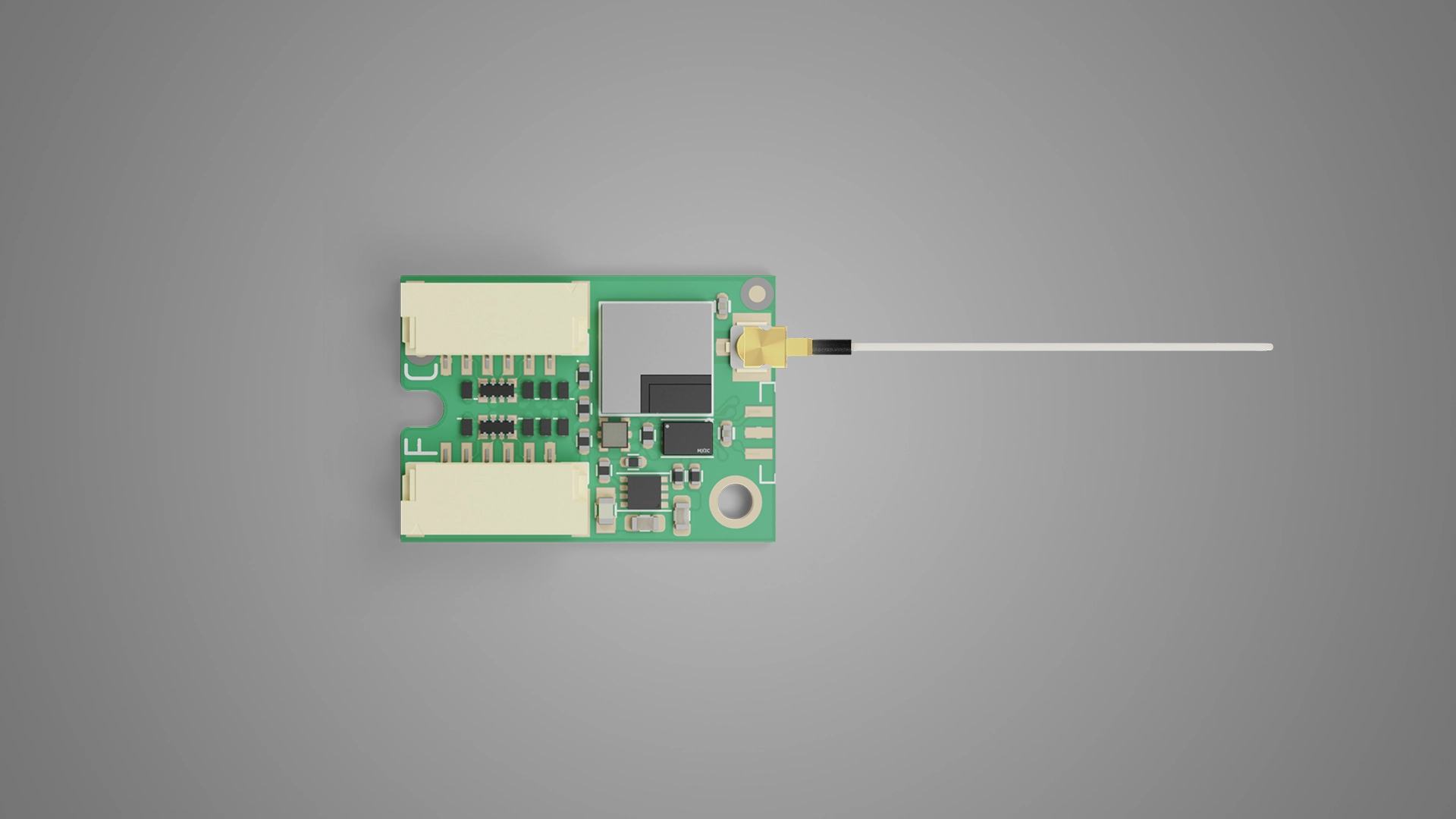
Two antenna variants
Choose between a U.FL connector for an external antenna for immediate use, or a board with a built-in antenna for testing.
NDAA-compliant
All electronic components are non-Chinese, and the module can be manufactured in the US to be fully compliant with Section 889 of the NDAA.

Used by

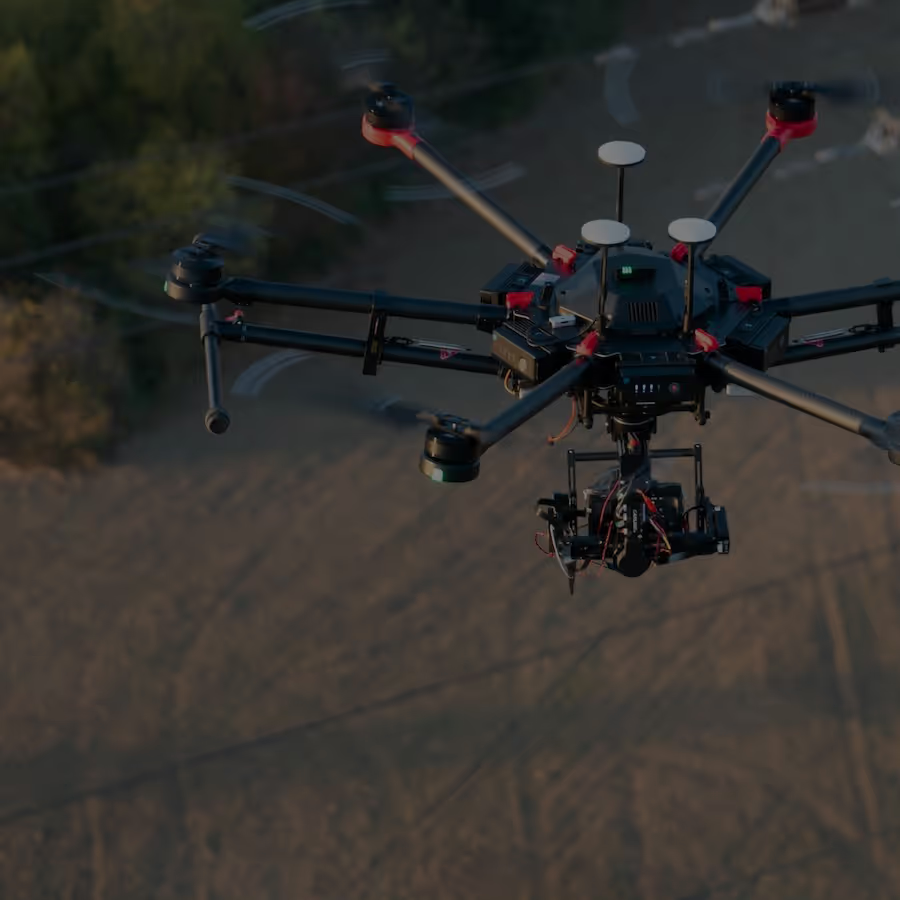
UAV Manufacturers
Ensure your drones meet all Remote ID requirements
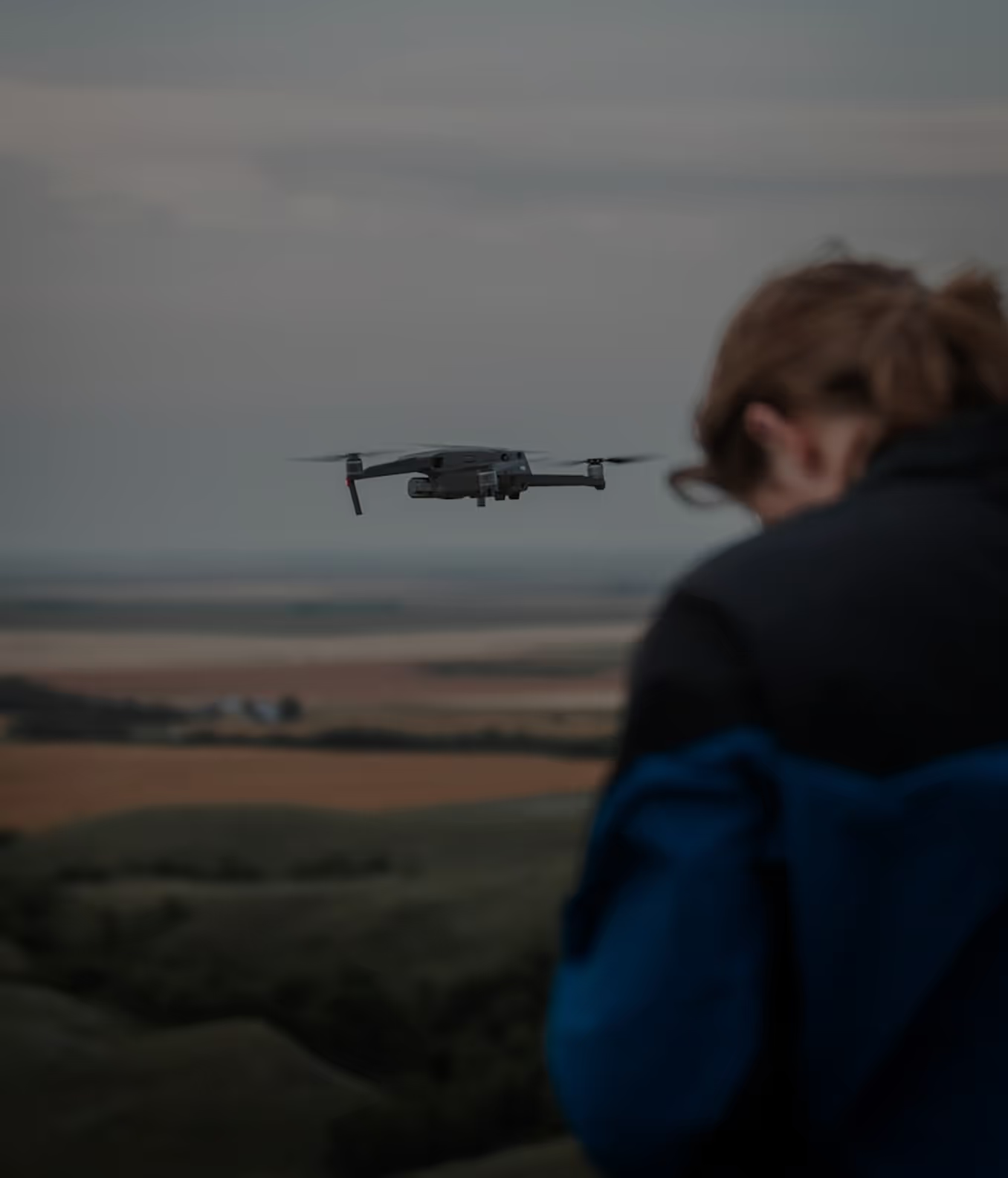
Professional Pilots & Drone Builders
Stay compliant and understand what’s flying near you

Looking for a custom offer or bulk price?

Tell us about your project or fleet size and our team will tailor a quote to your specific needs.
Get quote
Get Quote

Case Studies

Built for safety. Proven in the field.
See all case studies

Dronetag
Visualization Platform

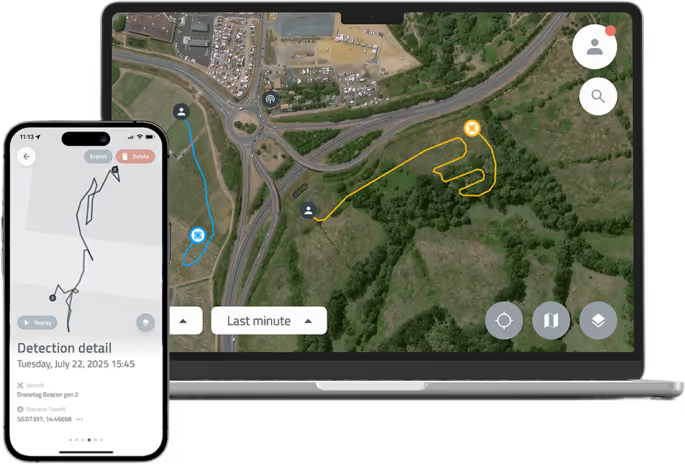
The Dronetag App is the central hub of our ecosystem, available free for iOS, Android,and in your web browser.
Manage all your devices, check airspace zones, plan flights, and inspect real-time flight data from a single, intuitive interface. Utilize features like custom alert zones, instant notifications and whitelisting to distinguish friend from foe.
Explore our platform
Flight Monitoring
Monitor your fleet with real-time flight paths and detailed telemetry
Device Management
Set-up, manage and update all your devices in one place
Flight Journal & Log Export
Replay historic flights and export data in multiple open formats
For Developers
Integration
Learn how to integrate with your existing tools and systems.
API Access
REST & WebSocket endpoints for custom dashboards.
Toolbox App
Utility for advanced configuration and diagnostics.

Instant Remote ID
Compliance

Our ecosystem is engineered for global compliance. We actively monitor the international Remote ID landscape and are committed to securing all necessary approvals to ensure our solutions are compliant wherever you operate.
EU
ASD-STAN EN 4709-002
USA
ASTM F3411-19
UK
ASD-STAN EN 4709-002

Hobby pilot or aeromodeller?

Discover Dronetag BS – battery-powered Remote ID module with its own GNSS receiver.
Meet our BS

Specifications

Documentation & Downloads
Dive into the full user guide or grab a product sheet.
Hardware and Design
Mounting
M2 holes or double-sided tape
Operating temperature
−40 °C to +85 °C (–40 °F to 185 °F)
Dimensions & weight
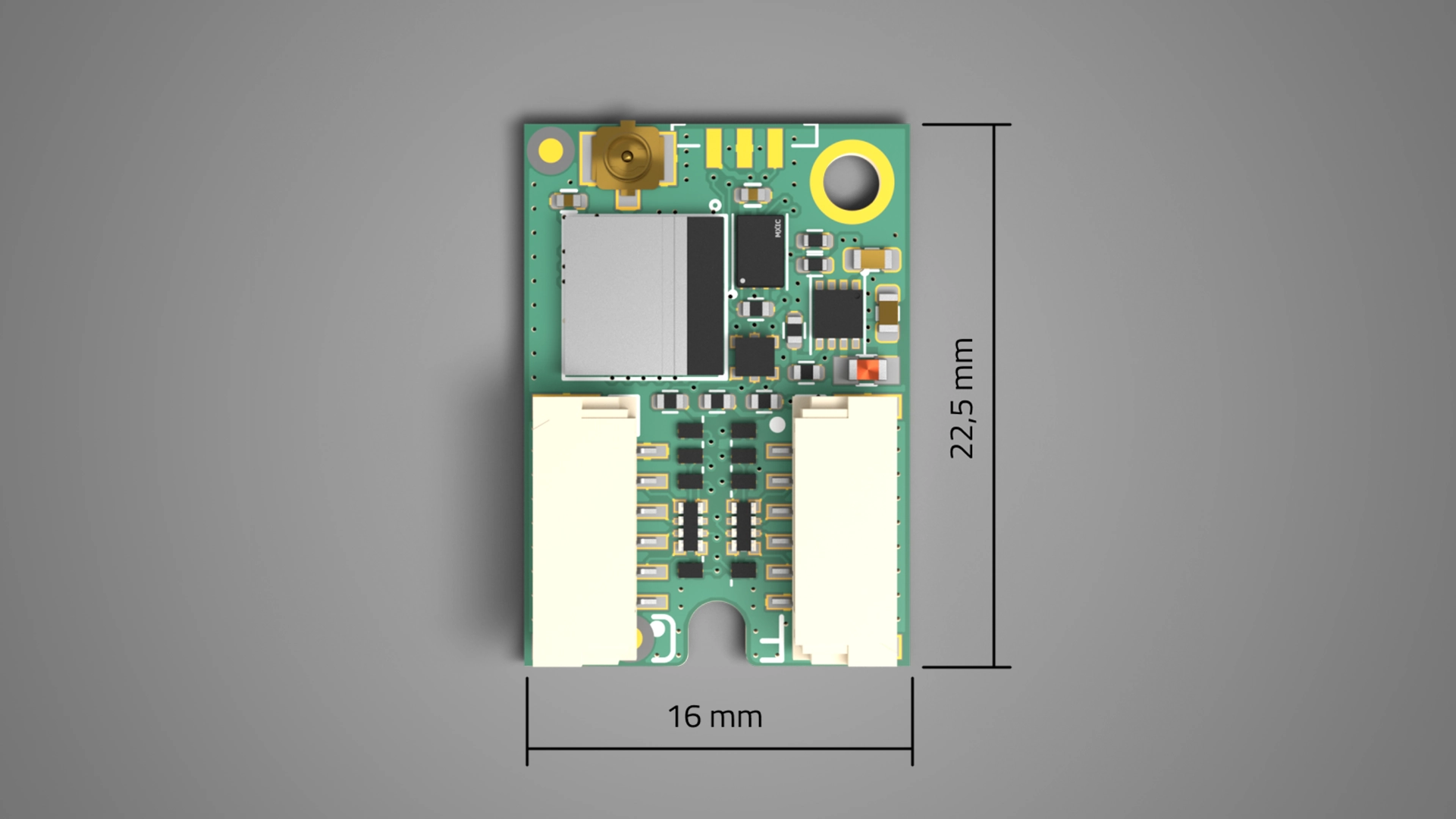
22.5 × 16 × 5 mm, 1.5 g (with JST connectors)
Power & Charging
Battery source
via flight controller
Average current
3 mA
Maximum current
10 mA
Connectivity
Short‑range radio
Bluetooth 2.4 GHz (up to 3 km)
Technology
Bluetooth 4.0 Legacy + 5.0 Long Range
Communication
UART (3.3 – 5 V tolerant)
Protocols
MAVLink 2
Connectors
2× JST GH 6‑pin (1.25 mm pitch)
Built‑in antennas
none
Optional antennas
1× U.FL (IPEX compatible)
Sensors
Sensors
none
Positioning
none

FAQ

Why choose the Dronetag Remote ID OEM solution rather than others?
We began developing drone coordination systems in 2018, focusing on creating value beyond simple regulatory compliance. Our customer-oriented strategy ensures our systems and documentation are as easy to use as possible. We stand behind our user experience, proven by being the first company to participate in unsponsored public reviews and earn the trust of stakeholders like ANSPs, drone manufacturers, and UTM providers.
What is the added value of Dronetag DRI as a Remote ID OEM system compared to the competition?
Our main advantages are:

1. Compact design: Our single-sided board is the most compact solution on the market, allowing flexible mounting with either double-sided tape or M2 screws.

2. Complete ecosystem: We offer more than just hardware. Our Dronetag App is used for configuration and provides airspace awareness, while our open-source Drone Scanner app can be used for compliance testing.

3.Reliable components: Dronetag DRI is built with extensively tested, industrial-grade components of non-Chinese origin to ensure it poses no risk to your aircraft.
What is the difference between your product and the ESP32-based ones?
Some manufacturers use ESP32 microcontrollers, which are known for potential issues with production quality, overheating, and electromagnetic interference. As Remote ID is a critical aircraft component, any malfunction could lead to a dangerous situation. While ESP32s can be cheaper, we build the Dronetag DRI with industrial, non-Chinese components and test every unit to avoid such risks.
We are already using another Remote ID solution. Is it worth a switch?
If you are only looking to solve the regulatory burden, perhaps not. However, if you are interested in the added value of drone coordination systems, online flight logs, and easier aircraft diagnostics, we would be happy to show you what our technology can do. We offer free consultations to help you evaluate the benefits of switching to Dronetag.
Why does Dronetag DRI use Bluetooth instead of Wi-Fi for Remote ID?
We believe Bluetooth is superior for Remote ID for three main reasons:

1. Less interference: Wi-Fi RID often interferes with a drone's 2.4 GHz radio control. Bluetooth uses separate beacon channels to avoid this conflict.

2. Lower power & EMI: Wi-Fi requires up to 10 times more transmission power than Bluetooth, which drains the battery and creates electromagnetic interference that can affect a drone’s GPS or compass.

3. Smartphone compatibility: Most smartphones cannot reliably receive Wi-Fi RID signals broadcast from drones.
Why is it not a good idea to use Bluetooth and Wi-Fi RID simultaneously?
Most dual-transmission implementations lack radio coexistence protocols, which can overwhelm the radio chip. This results in corrupted data, unreliable transmission frequencies, and unnecessary electromagnetic noise and interference.
What if I have customized firmware running on a Pixhawk-based FC or a completely custom FC?
That's no problem. We have completed numerous integrations with custom firmware and flight controllers. It takes longer to integrate than a standard plug-and-play setup.
What is a Standard Remote ID drone?
In the US, a Standard Remote ID drone is one manufactured with built-in Broadcast Remote ID capabilities. It meets the specific technical and performance standards required by the FAA to ensure the system provides accurate, reliable information that can be received by standard devices like smartphones.
What is a C-class certified drone?
The C-class label indicates that a drone meets specific technical and safety requirements for the EU region, as applied by the manufacturer. Drones between 250 grams and 25 kg without a C-class label are restricted to flying in subcategory A3.
What is the difference between a Standard Remote ID drone and a Broadcast Remote ID module?
This distinction is used only in the US. A Standard Remote ID drone has the capability built in by the manufacturer. A Broadcast Remote ID module is an add-on device that retrofits an older, non-compliant drone. Drones using an add-on module are limited to visual line-of-sight (VLOS) operations.
Where is the device manufactured?
All our devices are manufactured in Prague, the Czech Republic, Europe. However, the manufacturing site can be changed to meet customer needs.
Can I manufacture and assemble Dronetag DRI at my facilities?
Yes, we are open to cooperation and can work on a licensing basis if you wish to use your own supply chains and manufacturers.
Can you manufacture Dronetag DRI in the NDAA-compliant variant?
Yes. All electronic components and software are of non-Chinese origin. When manufactured in the US, the device is fully compliant with Section 889 of the National Defense Authorization Act (NDAA).
Where does the device take information about drones and pilot positions?
Dronetag DRI has no internal sensors; it relies on position information from your flight controller via MAVLink frames. If you need a standalone device with onboard sensors, please see our Dronetag Mini and Dronetag Beacon.
Is the end customer required to use the Dronetag App?
No. Once integrated and configured, Dronetag DRI works out of the box, without requiring the end user to interact with any app. However, the app is required to receive the latest features via firmware updates. We can also provide a white-labeled version of the app to suit your needs.

The Manufacturer's Choice for Remote ID

Accelerate your production schedule, simplify your compliance process, and equip your drones with a market-leading Remote ID solution.
€49 / $59
Buy now
Plug-and-play MAVlink integration
Extremely low SWAP at 1.5 g
Full support through FAA & EASA

Take Off with Dronetag Now

Whatever your airspace needs, we’ll help you find the right setup from hardware to integration.