Autonomous flights on the rise
Our network of over 3,000 receivers sees a clear shift. Dronetag Detection Network data, based on the drone models it picks up, shows autonomous operations grew 2.6× year on year, and 24.9 % of the flights we see in the US are now autonomous.
Public safety agencies are part of that shift, and they share low airspace with everyone else. Deconflicting flights, keeping operations secure and keeping the public safe all start with seeing that traffic. Remote ID is the most cost-effective way to do it – it covers the vast majority of everyday drone traffic.
The DFR range gap
Most drones broadcast Remote ID on 2.4 GHz. Skydio, fast becoming the go-to platform for DFR in the US, with over 1,000 docks deployed with public safety agencies, uses 5 GHz.
On an omnidirectional antenna, a Skydio is received out to about 1 mile. That’s where 5 GHz reception has always stopped. Most DFR programs fly further than that:
DFR operating ranges and Skydio detection ranges
DFR · Chula Vista (declared)
DFR · Arlington PD (declared)
DFR · Chattanooga (declared)
Skydio on an omni antenna
Scout Gen 2 covers the declared operating area of all three. Your own drones stay visible for the whole response, and so does anyone else flying nearby.
Why no other receiver does this
Until now, every Remote ID receiver on the market – Scout included – picked up 5 GHz only on omnidirectional antennas. Omni antennas listen in every direction, but not far. So 2.4 GHz reached out on the directional sectors while 5 GHz stayed close to the mast.
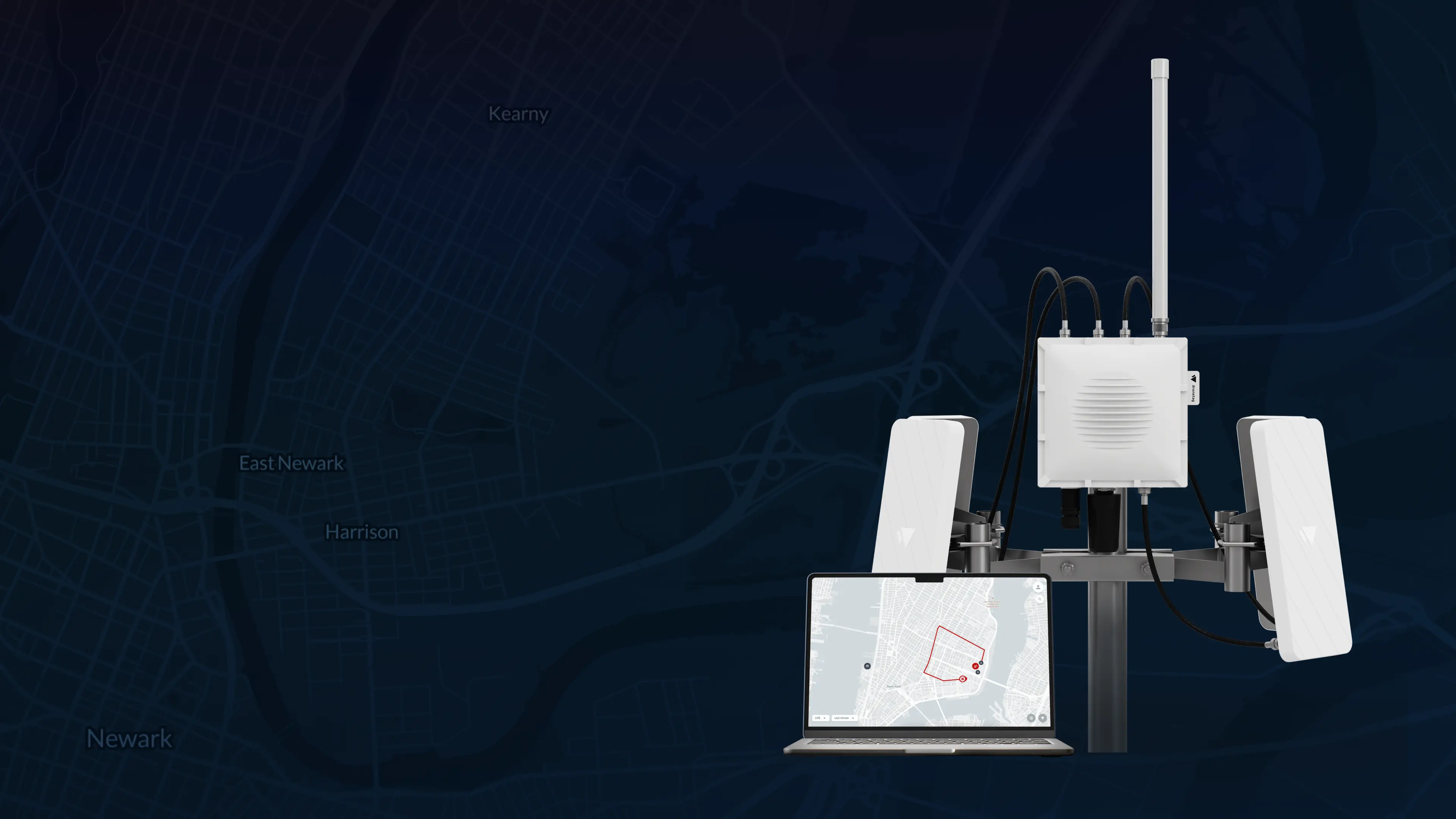
For Gen 2 we rebuilt the whole RF frontend. Every antenna, omnidirectional and sector, now receives both bands. In the High Performance configuration that takes 5 GHz out to 5+ miles (8+ km). No other Remote ID receiver on the market does this.
What else is new
2.4 GHz reception improves too – by 10 %.
LTE now comes as standard. The US version is FirstNet capable, with full support arriving in an upcoming firmware update – so agencies get the connectivity they rely on in the field.
Manned traffic plus High Performance Remote ID. The new Aviation High Performance configuration combines long-range Remote ID with manned traffic monitoring – ADS-B, ADS-L, UAT, FLARM and more.
Four standard configurations
See it over your own airspace
Request a free test unit and see what Scout Gen 2 picks up over your area.
Want to see Scout in the field first? Skyprint is the receiver analytics tool that comes with your Dronetag App account.